Things to do in Marrakech: 10 classic sights and experiences, with practical tips
Updated 2 November 2026 · 6 min read · By the Agafay Desert Tour team
The top things to do in Marrakech are wandering Jemaa el-Fnaa square and the souks, visiting Jardin Majorelle, the Bahia Palace, the Saadian Tombs and the Ben Youssef Madrasa, seeing the Koutoubia minaret, relaxing in a hammam, learning Moroccan cooking, and spending an afternoon in the nearby Agafay Desert. Most of the sights are in or near the old town (the medina), so you can see a lot on foot in two or three days.
Below are ten classic experiences, what each one is, and practical tips to make the most of them. We're a booking service for Agafay Desert trips; the rest of this list is independent advice.
Quad + Camel + Dinner & Show
350 MAD per person · 3:00 PM pickup in Marrakech · pay by cash on the day
More about this activity:Agafay Desert guide →Agafay desert tours →
1. Jemaa el-Fnaa: the main square
Jemaa el-Fnaa is the big open square at the heart of the medina, and the place most visitors start. By day you'll see stalls, snake charmers, henna artists and people with monkeys. From late afternoon the square changes: food stalls set up, and musicians, dancers and storytellers draw crowds. The evening is the best time to go.
Tips: performers and animal handlers expect payment if you take photos, so agree before you raise your camera. Keep an eye on your bag in the crowds.
2. The souks
Right next to Jemaa el-Fnaa, a maze of market streets sells almost everything: spices, leather, lanterns, pottery, rugs, textiles and more. Getting a little lost is part of the experience.
Tips: bargaining is normal, and the first price quoted is rarely the final one. Stay friendly, decide in advance what something is worth to you, and walk away politely if it's too much. Be wary of strangers offering to "show you the way", as they often expect payment or lead you to a particular shop.
3. Jardin Majorelle and the Yves Saint Laurent museum
Jardin Majorelle is a garden the French painter Jacques Majorelle began in 1923 and developed for decades, famous for its cactus collection, fountains and the bold cobalt blue of its buildings, now known as "Majorelle blue". Yves Saint Laurent and Pierre Bergé later bought it and saved it. The garden also has a Berber Museum, and the Musée Yves Saint Laurent is next door.
Tips: tickets are sold online, so book ahead, and go early to avoid the busiest hours.
4. Bahia Palace
The Bahia Palace is a 19th-century palace built by two of Morocco's grand viziers, a father and his son. It was begun in the 1860s and greatly expanded in the 1890s, and today covers about 2 hectares with around 150 rooms. It's known for its painted cedar ceilings, carved stucco, tiled courtyards and gardens.
Tips: it sits just north of the Mellah (the old Jewish quarter), so you can combine the two. It gets busy with tour groups in the late morning.
5. Koutoubia Mosque
The Koutoubia is Marrakech's largest and most famous mosque, built in the 12th century. Its tall minaret, completed in the late 12th century, is the city's landmark and a handy way to find your bearings from almost anywhere in the medina.
Tips: non-Muslims can't go inside, but you can admire the minaret and walk in the gardens around it, which are lovely in the early evening.
6. Saadian Tombs
The Saadian Tombs are the 16th-century burial place of the Saadian dynasty, with richly decorated chambers of carved stone, cedar and tilework. They were later sealed off and fell out of use, until they were rediscovered in 1917, restored and opened to visitors.
Tips: the tombs lie right behind the Kasbah Mosque, in the old royal kasbah district. The site is small, so going early helps you avoid the busiest times.
7. Ben Youssef Madrasa
The Ben Youssef Madrasa is a former Islamic school completed in the 1560s. Students lived in more than a hundred small rooms on two floors around a large courtyard decorated with zellige tiles, carved stucco and cedar wood. It closed as a school in 1960 and opened to visitors in 1982.
Tips: look up as well as around: the carved cedar and stucco are as impressive as the tiles, and the upper floor shows how small the students' rooms were.
8. A hammam
A hammam is a traditional steam bath, and a scrub in one is a very Moroccan experience. There are two kinds: local public hammams, which are simple and inexpensive, used by residents, with separate sections or times for men and women; and spa hammams, which are more comfortable and private, with massages and treatments.
Tips: for a first visit, a spa hammam is easier, and many take bookings ahead. In a public hammam, bring your own towel and a change of underwear, and follow what the locals do.
9. A cooking class
Many riads, restaurants and cooking schools in Marrakech offer classes, often starting with a trip to a market for ingredients, then cooking a tagine and Moroccan salads or bread together, and eating what you made.
Tips: check whether the class includes the market visit, how many people are in the group, and whether vegetarian options are possible.
10. An afternoon in the Agafay Desert
When you need a break from the medina's bustle, the Agafay Desert is the nearest open space: a stone desert of pale, rolling hills about 30 to 40 km south-west of Marrakech, 40 to 60 minutes by road, with the High Atlas on the horizon. It isn't the Sahara, but it's the desert you can enjoy in an afternoon and still be back in the city for the evening.
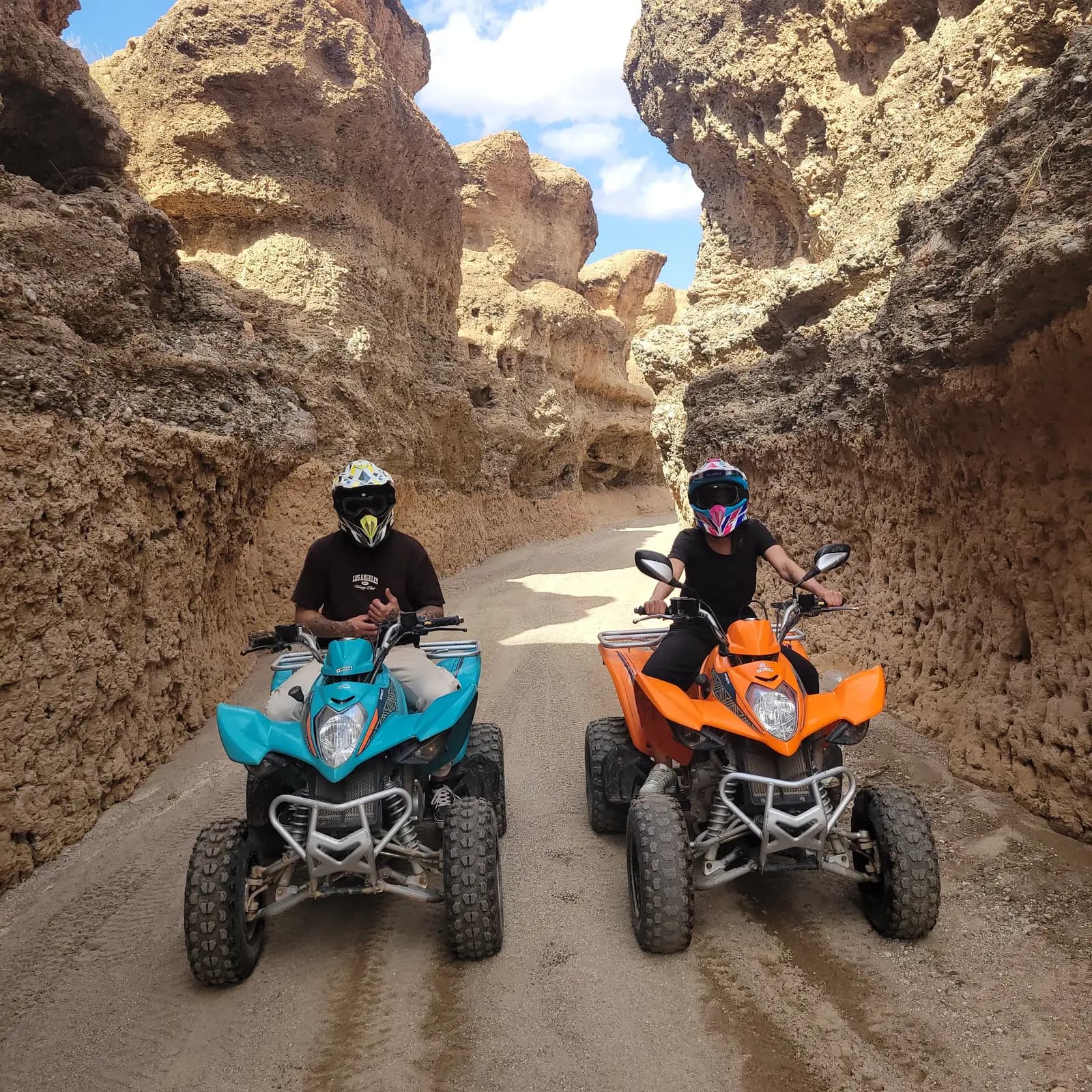
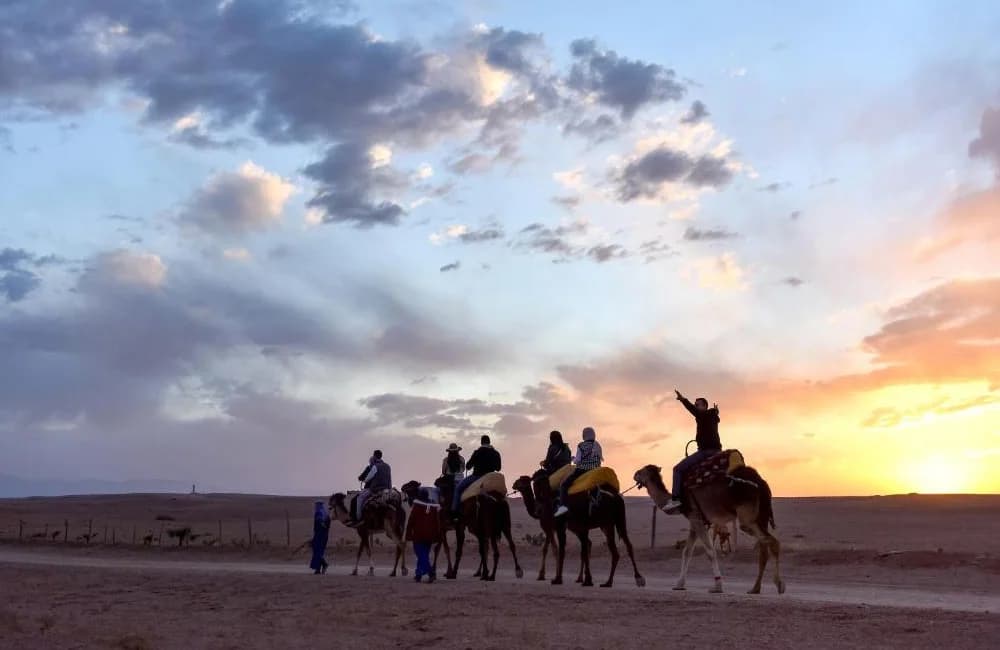
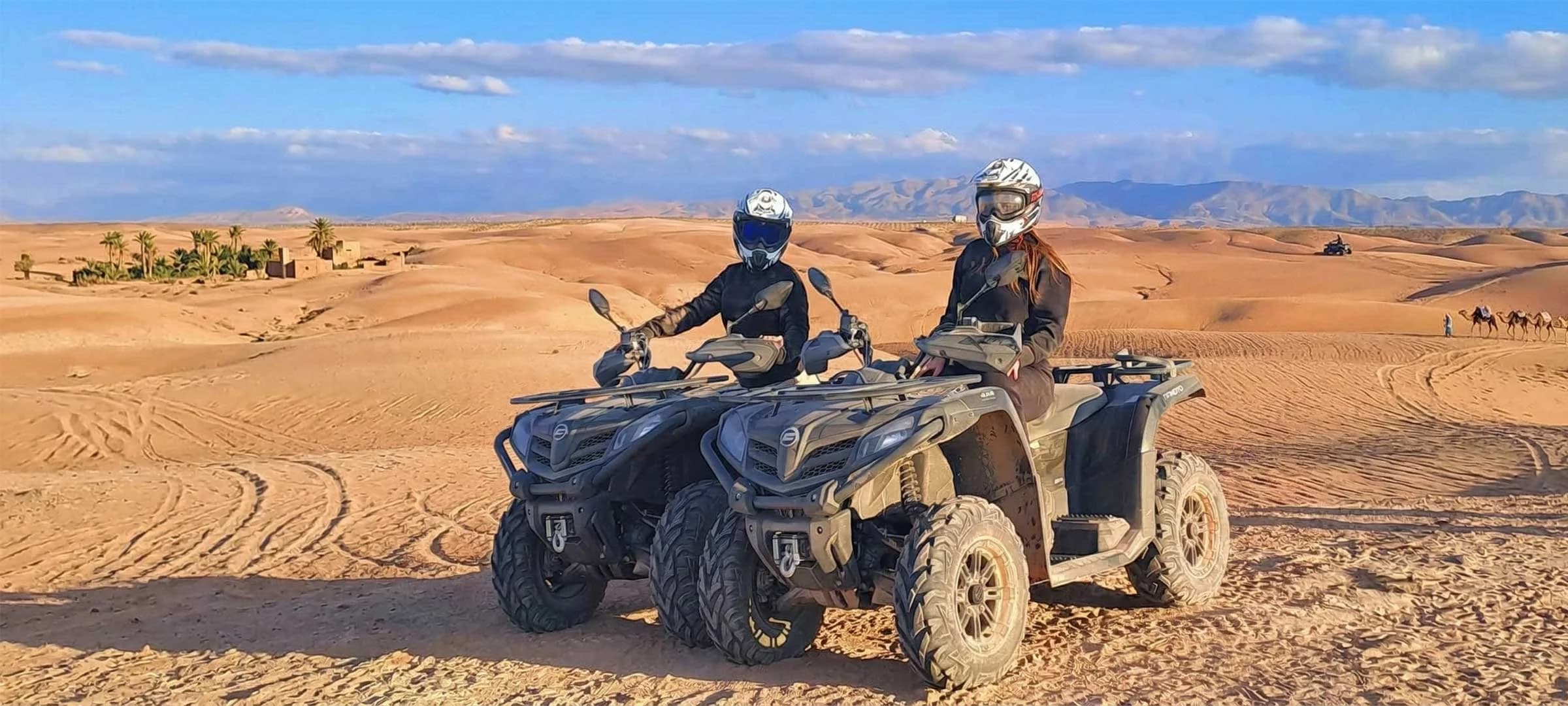
The trips we offer start with a free 3:00 PM pickup at your hotel or riad. You ride a quad, a buggy or a camel in the late-afternoon light, then have dinner with a live show from around 7:00 PM, and you're usually back in Marrakech around 8:00 PM. From about October to February, the sun sets while you're in the desert. Choose the Camel Ride + Dinner & Show (250 MAD), the Quad + Camel + Dinner & Show (350 MAD with 40 minutes on the quad) or the Buggy + Camel + Dinner & Fire Show (1400 MAD). You pay by cash on the day.
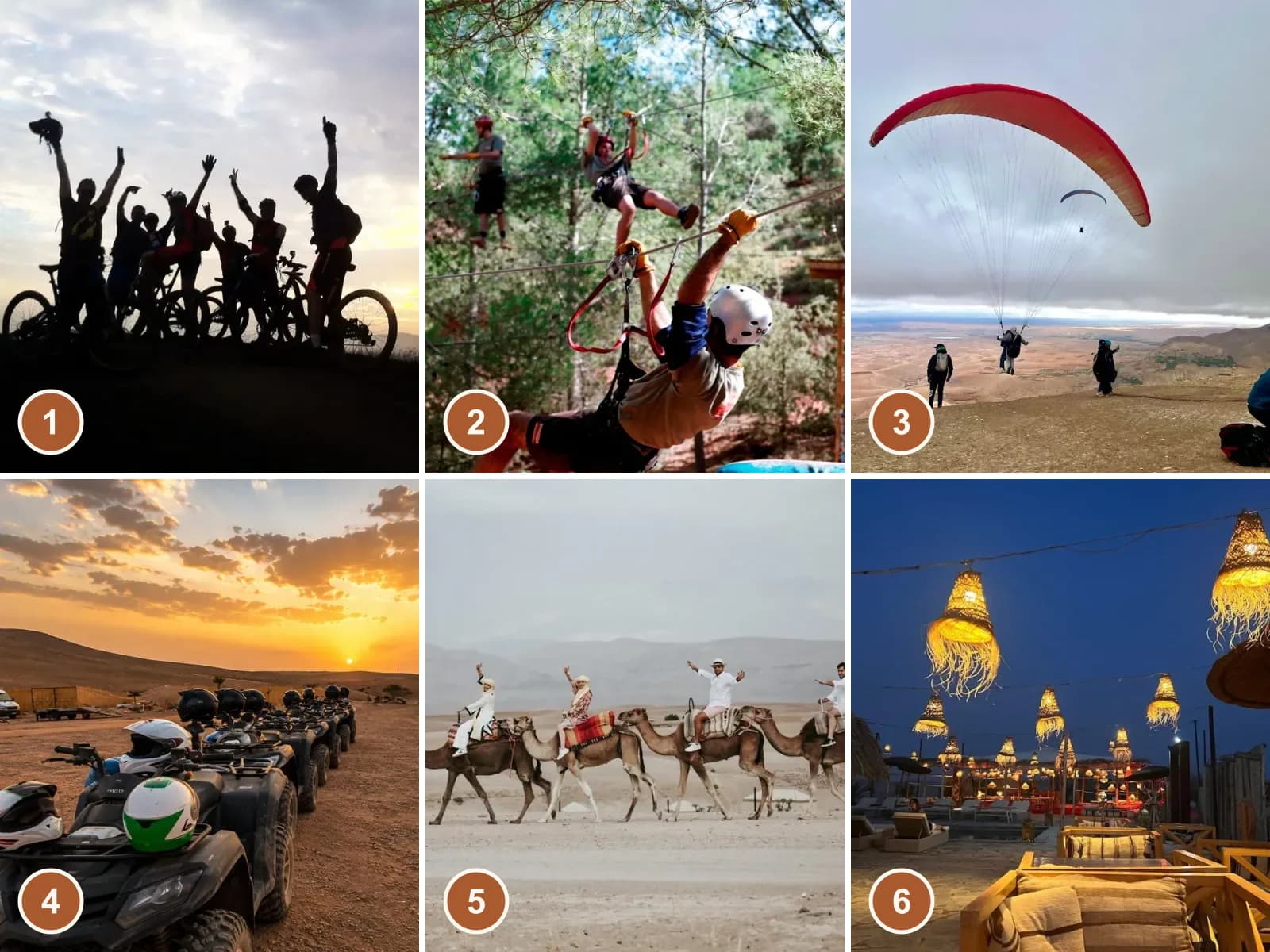
Want more adventure? One Day, 6 Unique Experiences starts in the Atlas foothills with an e-bike tour, the zipline at Terres d'Amanar and a paragliding flight from Aguergour, then continues in Agafay with your own quad, a camel ride and dinner with a show. Pickup is at 9:00 AM with private transport, and you're back around 9:30 PM.
How many days do you need in Marrakech?
- 2 days: one day for Jemaa el-Fnaa, the souks, the Koutoubia and the Ben Youssef Madrasa; a second morning for Jardin Majorelle and the Bahia Palace, and an afternoon in the Agafay Desert.
- 3 days: add the Saadian Tombs, a hammam and a cooking class at a gentler pace.
- 4 days or more: add a day trip, such as the Ourika Valley, Imlil or Essaouira. Our guide to day trips from Marrakech compares them.
Practical tips for Marrakech
- Use a map app offline. The medina's alleys are confusing, and signal can be patchy.
- Carry cash. Small shops, taxis and market stalls often don't take cards.
- Agree taxi fares before you get in, or ask for the meter.
- Dress modestly in the medina, covering shoulders and knees; it's also cooler in the sun.
- Plan around the heat. In July and August afternoons are often above 35 °C, so visit sights in the morning and save the afternoon for a rest or a late-afternoon trip.
- Bring layers in winter. Days are mild, but December and January nights in the Marrakech area average 6 to 7 °C. Our weather guide has month-by-month detail.
Planning a Marrakech trip? Add us as a preferred source on Google to see our guides more often when you search.
Add Agafay Desert Tour on GoogleHow this guide was made: drafted with the help of AI from our own trip information, with facts about other places checked against reliable sources before publishing.